

इस पौराणिक कथा से जानें कि सृष्टि को आगे बढ़ाने में स्त्री- पुरुष की होती हैं अहम भूमिका ।
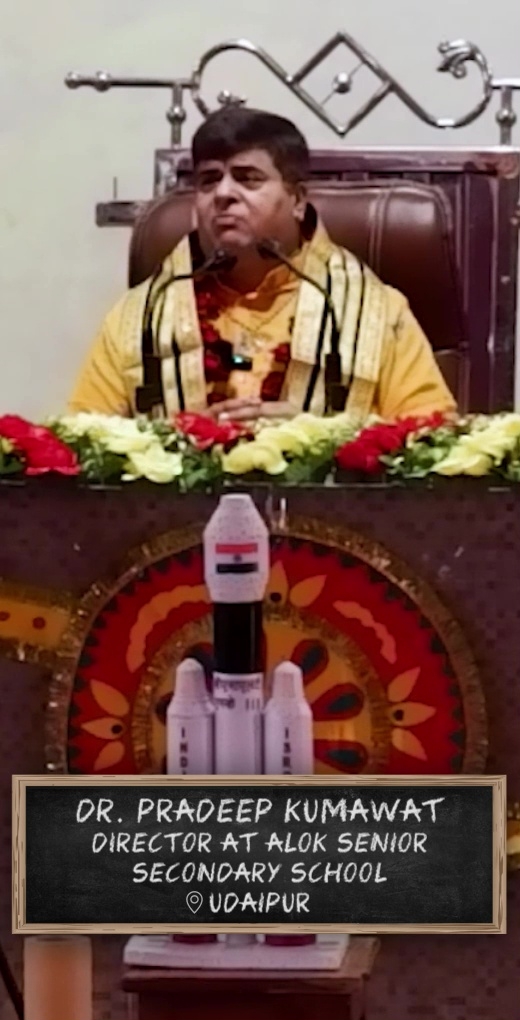
Dr. Pradeep Kumawat, Director, Alok Institutions
udaipur
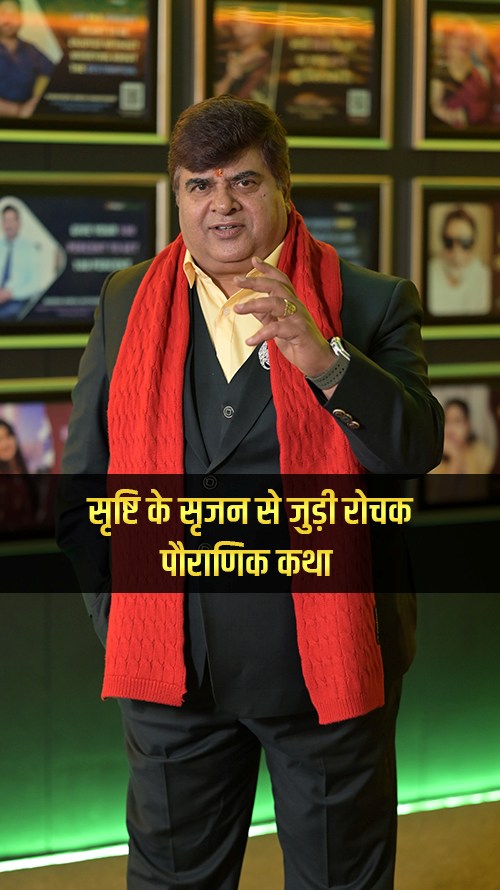
Pradeep Kumawat, Director of Alok Institution, Udaipur, explains the importance of males and females in creation through stories from the Puranas.
He says, there has been much discussion in India about the concept of Sanatan. Sanatan refers to that which is eternal and rooted in timeless values and ancient wisdom. It is a tradition that transcends time.
In this tradition of Sanatan Dharma, let's start with the Puranas, the ancient scriptures. The Puranas begin with the question: Who created the universe? It is commonly believed that Lord Brahma is the creator of the universe. But when Brahma was assigned the task of creation, there was first a cosmic vibration. From this vibration, the first sound that emerged was “OM” (Omkar).
Following that sacred sound, three qualities or gunas came into existence: Sattva (purity), Rajas (activity) and Tamas (inertia). From these three gunas, five fundamental elements were formed, which are Prithvi (earth), Jal (water), Akash (ether), Vayu (air), and Agni (fire). These five elements became the building blocks of creation.
As creation began, Lord Brahma asked his sons to continue the process of expansion. However, they refused, which became a matter of concern. He then turned to Narad, who was also born from Lord Brahma’s own body. However, Narad too refused, saying he did not wish to go to the mortal world and participate in creation. Thus, the story of creation in the Puranas unfolds. Brahma initiated the process, but his sons refused and Narad also declined. This led to a verbal dispute between Lord Brahma and Narad.
In anger, Lord Brahma cursed Narad, saying, “Because you disobey me, you shall wander endlessly and become a mere entertainer.” Narad, too, became angry and cursed his father in return: “You curse me, I too curse you, one day, your mind will be filled with thoughts that will bring you shame and humiliation.”
So, both father and son cursed each other. Lord Vishnu, witnessing this divine drama, smiled for this entire creation, this Maya, was not the result of their will, but a part of the divine play. The Pauranic narrative continues from here. It is said that Narad wandered across the world.
Meanwhile, Lord Brahma, troubled by his failure to expand creation, thought, “What should I do now?” So he went to Lord Shiva for guidance. Lord Shiva was deeply immersed in meditation. While Lord Brahma pondered over the stagnation of creation, at that very moment, Lord Shiva, still in meditation, transformed half of his body into a female form, while the other half remained male. This divine form marked the emergence of Ardhanarishvara, the half-male and half-female aspect of Lord Shiva.
Lord Brahma was astonished at this form. Then Lord Shiva said, “This is your answer. The world can only progress when the feminine energy is brought into creation.”
From that moment, the divine feminine was manifested and Manu and Shatarupa were created as the first man and woman to populate the world.
Thus began the expansion of life through the union of male and female. This process is known as “Maithuni Srishti,” meaning creation through union. From this point, the universe truly began to expand.
This was the process of creation initiated by Lord Brahma and from here, the vast cosmic cycle unfolded.
MORE VIDEOS BY Dr. Pradeep Kumawat